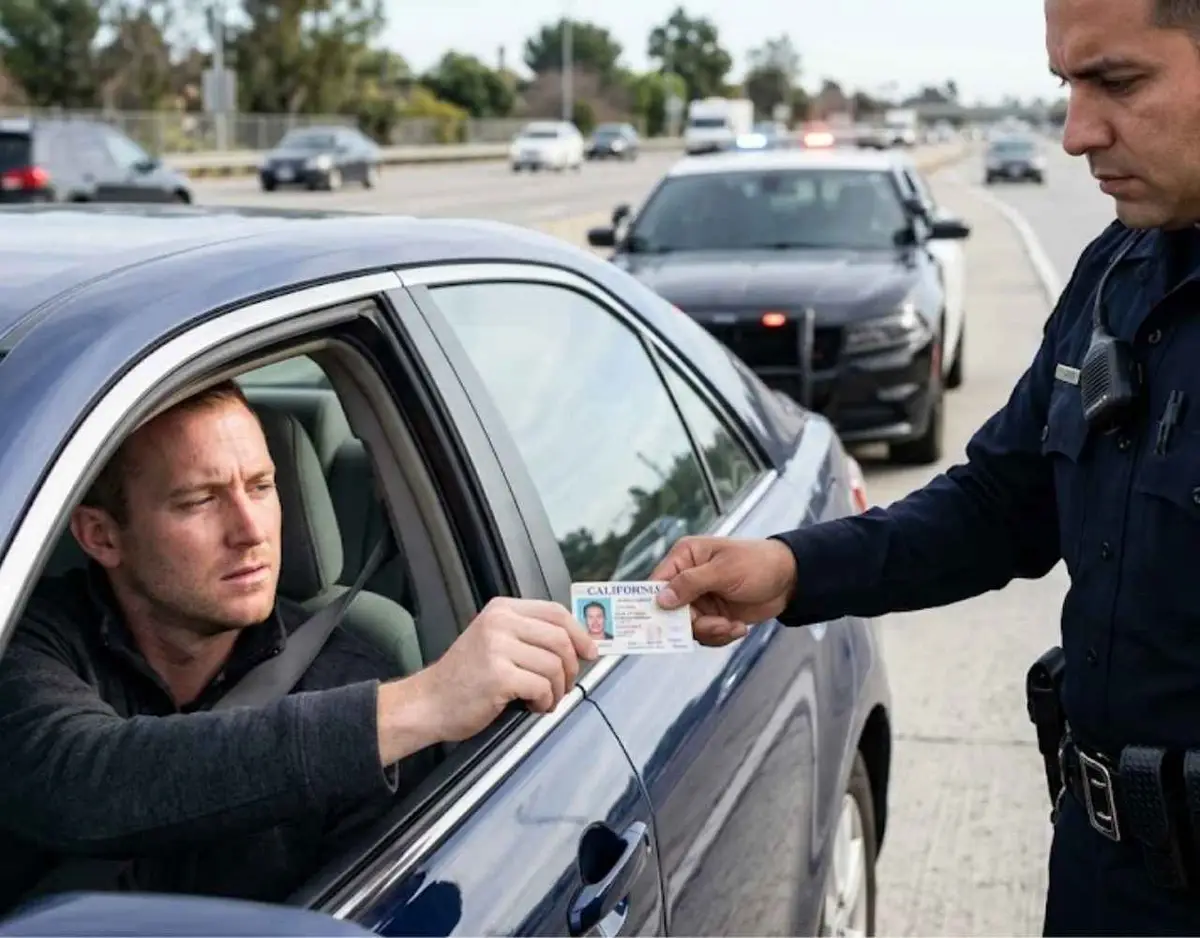
Getting pulled over for a suspected DUI is stressful enough without wondering what happens to your driver’s license the moment the officer hands you paperwork. In Illinois, the answer is not a simple yes or no. Your license does not disappear on the spot, but the clock starts ticking the second you leave that traffic stop.
At Dohman Law Group, we have spent more than 40 years defending drivers across Cook, DuPage, Kane, and Lake counties. We handle DUI and traffic cases exclusively, so we know exactly how this process plays out, from the arresting officer’s first request for a breath test through the final reinstatement paperwork. Whether local police or the Illinois State Police made the stop, our team works as your criminal defense attorney and your license defense team at the same time. If you were just arrested, schedule a free consultation with our team before your suspension deadline passes.
What Happens to Your License in the Hours After an Illinois DUI Arrest

Illinois does not pull your driving privileges the instant you are arrested. The state is an implied consent state, and its implied consent laws mean anyone operating a motor vehicle here has already agreed to testing if a law enforcement officer has reason to believe they are impaired.
Refuse that test, or fail it with a blood alcohol content of .08 or higher, and the officer issues a suspension notice on the spot. That single notice sets everything else described below in motion.
How Officers Test for Impairment
Officers document impairment a few different ways:
- A breath test, using alcohol breath testing devices at the station.
- A blood test, or less commonly a urine test.
- A search warrant for a blood-alcohol test, in some cases involving a crash with injuries, if the driver refuses a breath or blood test.
Whichever method is used, the result gets recorded as your blood alcohol concentration, sometimes called your blood alcohol content, blood alcohol level, or blood alcohol readings.
Your Temporary Driving Permit
The suspension notice works as a temporary driving permit for 45 days. The actual statutory summary suspension does not take effect until the 46th day after the notice is served. You keep driving during that window, but only if you act before it closes.
How Long a Statutory Summary Suspension Lasts
The length of your suspension depends on two things: whether this is your first offense, and whether you refused testing or failed it. Illinois has no lookback period, so every prior DUI disposition counts toward your record no matter how long ago it happened.
| Offense level | Failed chemical test | Refused chemical test |
|---|---|---|
| First offense | 6 months | 12 months |
| Second or subsequent offense | 1 year | 3 years |
A summary suspension counts as an administrative suspension, separate from any criminal penalty tied to the DUI charge itself. Illinois applies this administrative driver’s license suspension as an administrative action, sometimes grouped with other administrative sanctions, because the Secretary of State puts it in place automatically once notice is given rather than waiting on a conviction.
That is different from a full driver’s license revocation, a harsher administrative revocation that typically follows a second or third DUI conviction rather than a single arrest. The suspension itself moves faster than the criminal court process precisely because it does not depend on the outcome of your case.
Your 45-Day Window, Visualized
Here is how the timeline actually unfolds after an arrest.
| Day | What happens |
|---|---|
| Day 0 | Arrest occurs, chemical test administered or refused, suspension notice issued |
| Days 1 to 45 | Notice serves as a temporary driving permit |
| Day 46 | Statutory summary suspension officially begins |
| Within 90 days of the notice | Deadline to file a petition to rescind the suspension |
Missing that 45-day window matters. Once day 46 arrives, the suspension is active whether or not you have resolved the underlying criminal case.
Driving Options While Your License Is Suspended
A suspension does not have to mean parking your car in the driveway for months. Illinois offers a Monitoring Device Driving Permit, commonly shortened to MDDP, to eligible first-time offenders.
An MDDP lets you drive anywhere, at any time, as long as a breath alcohol ignition interlock device, known as a BAIID, is installed in your vehicle. A few states use a similar setup under the name Ignition Interlock Driver License, but Illinois issues the MDDP paired with the BAIID instead.
Either way, the idea is the same: an ignition interlock lets an eligible driver keep driving while proving sobriety at every start.
A few conditions apply:
- You generally cannot qualify if your license was already invalid, if the arrest involved a death or serious injury, or if you are under 18.
- Once the permit is approved, you must install the BAIID within 14 days or lose the ability to drive for any purpose besides getting the device installed.
- The device records every start attempt and any alcohol detected, so it is not a workaround; it is a monitored privilege.
Drivers who do not qualify for an MDDP, including most repeat offenders, may eventually need a restricted driving permit, also called a restricted license, a limited license, or informally a work permit, to reach work, school, or medical appointments.
Challenging the Suspension Through Judicial Review

A statutory summary suspension is not automatically permanent, and you do not have to accept it without a fight. Illinois law allows you to file a petition to rescind the suspension in circuit court, separate from the underlying criminal case.
You generally have 90 days from the date of the notice to file, and the court must hold a hearing within 30 days of that filing. Filing a petition does not pause the suspension while you wait for the hearing, so timing matters as much as the argument itself. Grounds for rescission are limited by statute and can include issues with how the stop, arrest, or testing was carried out.
This judicial review process is different from the administrative hearings the Secretary of State holds for full license revocations, which typically follow a second or third DUI conviction rather than the initial arrest.
DUI Charges Are Not Limited to Alcohol
Illinois’ DUI law reaches beyond alcohol. Impaired driving caused by illegal substances, certain prescription medications, or any other intoxicating compound a driver has inhaled or ingested can trigger the same implied consent laws and the same statutory summary suspension described above. Drug offenses tied to a DUI arrest can also add separate criminal record consequences on top of the license suspension itself.
Whether your case involves alcohol, drugs, or both, reinstatement usually starts with an alcohol assessment, sometimes paired with a recommended DUI school or treatment program, before the Secretary of State will consider lifting the suspension.
Getting Your License Back: Reinstatement Steps
Once your suspension period runs its course, reinstatement is not automatic. The Secretary of State generally requires:
- Completion of a state-approved alcohol assessment (also called an alcohol and drug evaluation).
- Any recommended DUI school, risk education course, or treatment based on that evaluation.
- Proof of SR-22 insurance, typically maintained for three years.
- Payment of a reinstatement fee, commonly cited around $250 for a first offense and higher for repeat offenses.
Expect your insurance price increases to follow you well past the suspension itself. SR-22 filings and a DUI on your driving record both tend to raise premiums for years, not months. In some repeat-offense cases, Illinois law also allows vehicle seizure as an added consequence on top of the license and insurance impact described here.
The Criminal Case and the License Suspension Run on Separate Tracks
It helps to understand that losing your license and facing DUI charges are two different processes moving at two different speeds. The license suspension is a civil, administrative consequence tied to the implied consent law. The criminal DUI case proceeds separately in criminal court, and its outcome depends on the facts of your arrest, your prior offenses, and the evidence collected, including the arresting officer’s police report.
This is exactly where a criminal defense attorney matters as much as protecting your driving privileges. Our criminal defense team represents drivers through the entire case, not just the license side of it, and we also defend closely related charges like reckless driving that sometimes accompany a DUI stop.
How Illinois Classifies DUI Charges
Illinois counts all prior offenses toward these classifications, with no lookback period, so an old DUI can still affect a new case.
| Charge | Classification |
|---|---|
| First or second DUI | Class A misdemeanor. A second offense can carry mandatory penalties such as jail time or community service. |
| Third DUI | Class 2 felony |
| Any DUI while driving on a license suspended or revoked for a prior DUI | Class 4 felony, even if it would otherwise be a first offense |
That is one more reason the clock on your suspension should not be the only thing you are watching. A charge is not a conviction, and the right defense depends on the specific facts of your case.
What to Do in the Hours After a DUI Arrest

If you were just arrested, a few practical steps can protect both your license and your case:
- Write down the exact time of your arrest and the time any chemical test was given.
- Keep the paperwork the arresting officer handed you. It shows your 45-day deadline.
- Avoid discussing the details of your stop or arrest with anyone besides your attorney, including other law enforcement officers who may follow up later.
- Request a copy of the police report once it becomes available. It is often one of the first documents your criminal defense attorney reviews.
- Contact a DUI attorney as soon as possible. The 90-day window to challenge your suspension moves fast.
Acting Fast Protects More Than Just Your License
The days right after a DUI arrest are the ones that matter most. Waiting to see what happens can mean losing your chance to challenge the suspension, missing the MDDP application window, or walking into your first court date without anyone in your corner.
We built Dohman Law Group around exactly this kind of case. DUI and traffic defense is not a side practice for us; it is the only thing we do, across three offices serving Rolling Meadows, Wheaton, and Geneva.
Whether you are dealing with a first arrest or a second look at your options, contact our office to talk through what is actually at stake and what comes next. Call us today for a free case review; we would rather answer your questions now than have you guess your way through the next 45 days alone.
Frequently Asked Questions
No. The suspension notice you receive at arrest acts as a temporary permit for 45 days. The actual suspension does not begin until the 46th day.
Many first-time offenders qualify for a Monitoring Device Driving Permit, which allows driving anywhere as long as a BAIID is installed in the vehicle.
The suspension is a civil, administrative consequence tied to Illinois’ implied consent law. A DUI conviction is a separate criminal outcome decided in criminal court.
You generally have 90 days from the date of the suspension notice to file a petition to rescind in circuit court, and the court must hold a hearing within 30 days of that filing.
No. Refusing a chemical test triggers a longer suspension than failing one, 12 months versus 6 months for a first offense.
Yes. A third DUI is automatically a Class 2 felony, and driving on a license suspended or revoked for a prior DUI can elevate even a first offense to a Class 4 felony.