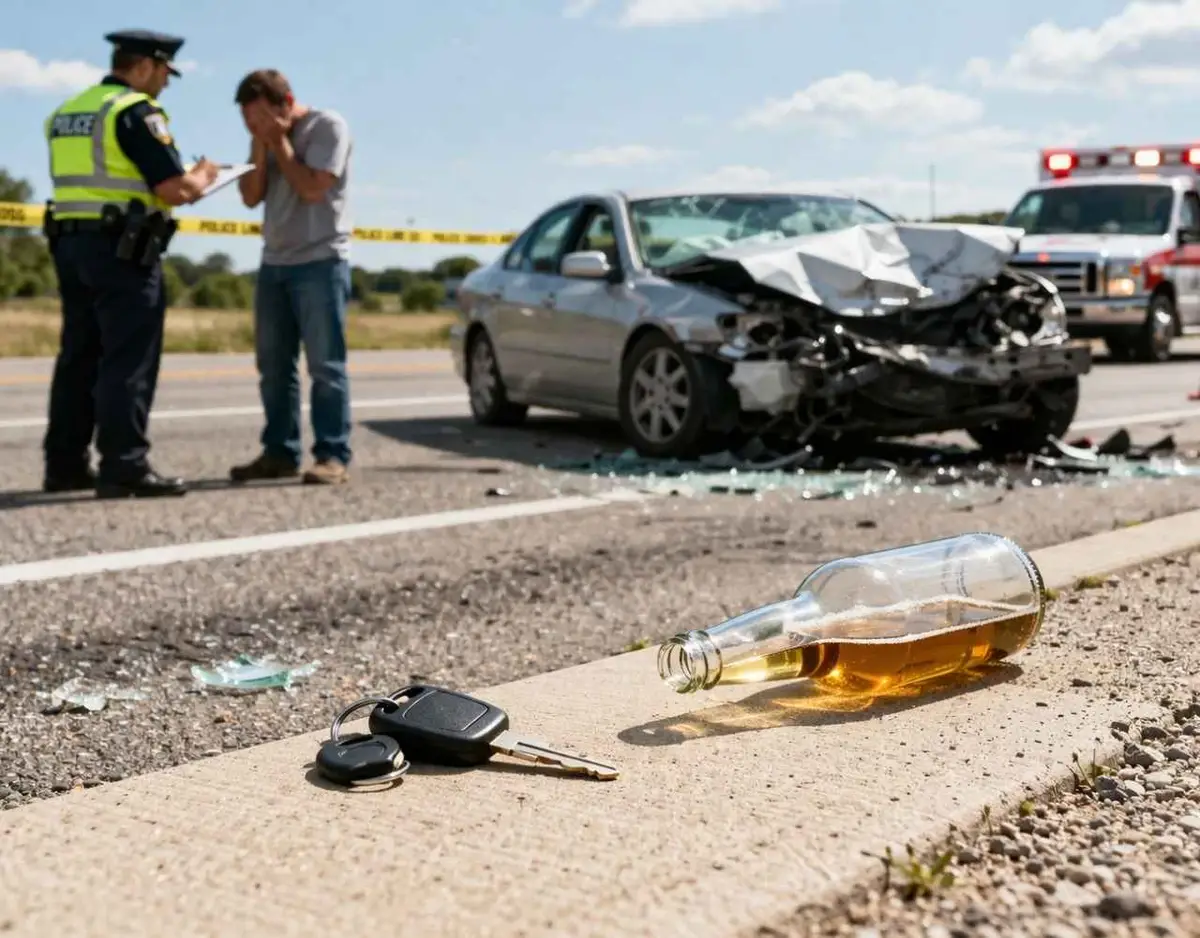
Most people know that driving under the influence is illegal, but fewer realize how serious the consequences become when a crash results in someone’s death. In Illinois, a fatal DUI crash can lead to extremely severe charges, including aggravated DUI causing death, DUI manslaughter, vehicular homicide, or even second-degree murder. A single decision involving alcohol or drugs can quickly turn into a life-changing criminal case.
When someone is facing a DUI death charge or possible DUI murder charges, the legal process can feel overwhelming. At Dohman Law Group, our experienced DUI lawyers work with individuals who need clear answers and strong legal guidance during some of the most difficult moments of their lives. Our goal is to help clients understand their rights and build a defense strategy that protects their future.
If you are facing serious allegations after a DUI accident involving a fatality, contact Dohman Law Group to discuss your case and learn how we can help.
When a DUI Fatality Becomes a Murder Case

Not every DUI fatality leads to murder charges. In many situations, the case may be prosecuted as DUI manslaughter or vehicular manslaughter while intoxicated. However, prosecutors may pursue a DUI murder charge if they believe the driver acted with extreme recklessness or showed a conscious disregard for the safety of others.
A DUI fatality might be treated more seriously if factors such as these are present:
- A very high blood alcohol concentration
- Prior DUI offenses
- Driving at dangerous speeds
- Ignoring warnings not to drive
- Driving on a suspended license
- Other reckless criminal conduct
In those situations, prosecutors may argue that the behavior went beyond criminal negligence and rose to the level of a DUI murder case. If a court agrees, the consequences can be significantly more severe than typical DUI penalties.
Charges That May Follow a DUI Causing Death
When someone dies in a crash involving alcohol or drugs, several charges may be considered under Illinois law. Each charge reflects a different level of alleged fault.
Possible charges include:
- Aggravated DUI causing death
- DUI vehicular manslaughter
- Vehicular homicide
- Involuntary manslaughter
- Negligent vehicular manslaughter
- Negligent homicide
People often ask about vehicular homicide vs manslaughter. While both involve a fatal crash, the difference usually relates to the level of recklessness or negligence involved.
Some of these charges may be prosecuted as class 2 felonies, especially when alcohol or drugs are involved in a fatal crash.
Understanding Potential Sentences

The penalties for DUI causing death in Illinois can be severe. Sentencing often depends on several factors, including the number of victims and the driver’s criminal history.
A typical DUI manslaughter sentence may involve years in prison. Courts also consider whether the driver had prior DUI offenses or whether the blood alcohol concentration was significantly above the legal limit.
In many cases, people want to understand the minimum sentence for a DUI resulting in death. Illinois law allows for mandatory prison time in certain situations, especially when the crash resulted in a loss of life.
Other consequences may include:
- Revocation of a driver’s license
- Court-ordered treatment or DUI school
- Long-term probation or supervision
- A permanent criminal record
Beyond criminal penalties, families of victims may file civil lawsuits seeking compensation for:
- Medical costs
- Funeral and burial expenses
These civil cases can add another layer of financial and emotional stress to an already difficult situation.
How Police Investigate DUI Death Cases
When a fatal crash occurs, investigators typically conduct a detailed examination of the incident. Police must gather evidence to determine whether the driver was impaired and whether that impairment contributed to the crash.
Common evidence may include:
- Field sobriety test results
- Blood or breath tests
- Hospital chemical testing
- Dashcam footage from patrol vehicles
- Surveillance video from nearby businesses
- Witness statements
- Accident reconstruction reports
Officers must also establish probable cause before making an arrest. If the initial traffic stop was unlawful or if investigators violated someone’s constitutional rights, the defense may challenge that evidence later in court.
These details can be extremely important when determining whether prosecutors actually have enough evidence to prove the case.
Defense Strategies in DUI Death Cases

A person charged with DUI manslaughter or DUI murder charges still has the right to defend themselves. Prosecutors must prove every element of the case beyond a reasonable doubt.
A skilled defense attorney may review the case for issues such as:
- Lack of probable cause for the traffic stop
- Errors during chemical testing
- Problems with blood or breath tests
- Improper administration of a field sobriety test
- Gaps or contradictions in witness statements
- Unreliable accident reconstruction
- Insufficient evidence connecting the driver to the fatal crash
In some cases, the defense may argue that other factors caused the crash, such as road conditions or another driver’s actions.
Even when alcohol is involved, prosecutors must still prove that the driver’s actions directly caused the unlawful killing.
The Human and Legal Impact of These Charges
Charges connected to DUI causing death carry serious consequences that go beyond the courtroom. A murder conviction or felony conviction can affect nearly every aspect of a person’s life.
Possible long-term effects include:
- Prison time
- Permanent criminal record
- Difficulty finding employment
- Loss of driving privileges
- Financial pressure from lawsuits
Courts also consider the consequences of drinking and driving when evaluating these cases. While voluntary intoxication may explain why someone made a poor decision, it is rarely accepted as a legal excuse for drunk driving.
These cases are often emotionally difficult for everyone involved, including the accused driver and the victim’s family.
Why Legal Guidance Matters

Cases involving DUI death charge allegations are legally complex. They often involve detailed evidence, expert witnesses, and technical forensic analysis.
Working with an experienced DUI manslaughter lawyer can help ensure that every piece of evidence is carefully reviewed. A defense attorney can also challenge improper procedures, question unreliable testimony, and make sure the client’s constitutional rights are protected.
The sooner a defense team becomes involved, the more opportunities there may be to investigate the case and prepare a strong legal strategy.
Get Legal Help if You Are Facing DUI Death Charges
A fatal crash involving alcohol can quickly lead to some of the most serious DUI charges under Illinois law. What begins as an investigation into driving under the influence may escalate into allegations of DUI manslaughter, vehicular homicide, or even DUI murder. Because the stakes are so high, understanding your legal rights and options is critical.
At Dohman Law Group, we help individuals navigate these difficult cases with clarity and strong legal advocacy. If you or a loved one is facing a DUI murder charge or other serious allegations connected to a fatal DUI crash, speaking with an experienced defense attorney can help you understand the path forward.
If you need guidance after a DUI accident involving a fatality, contact Dohman Law Group today to learn how we can help protect your rights and your future.