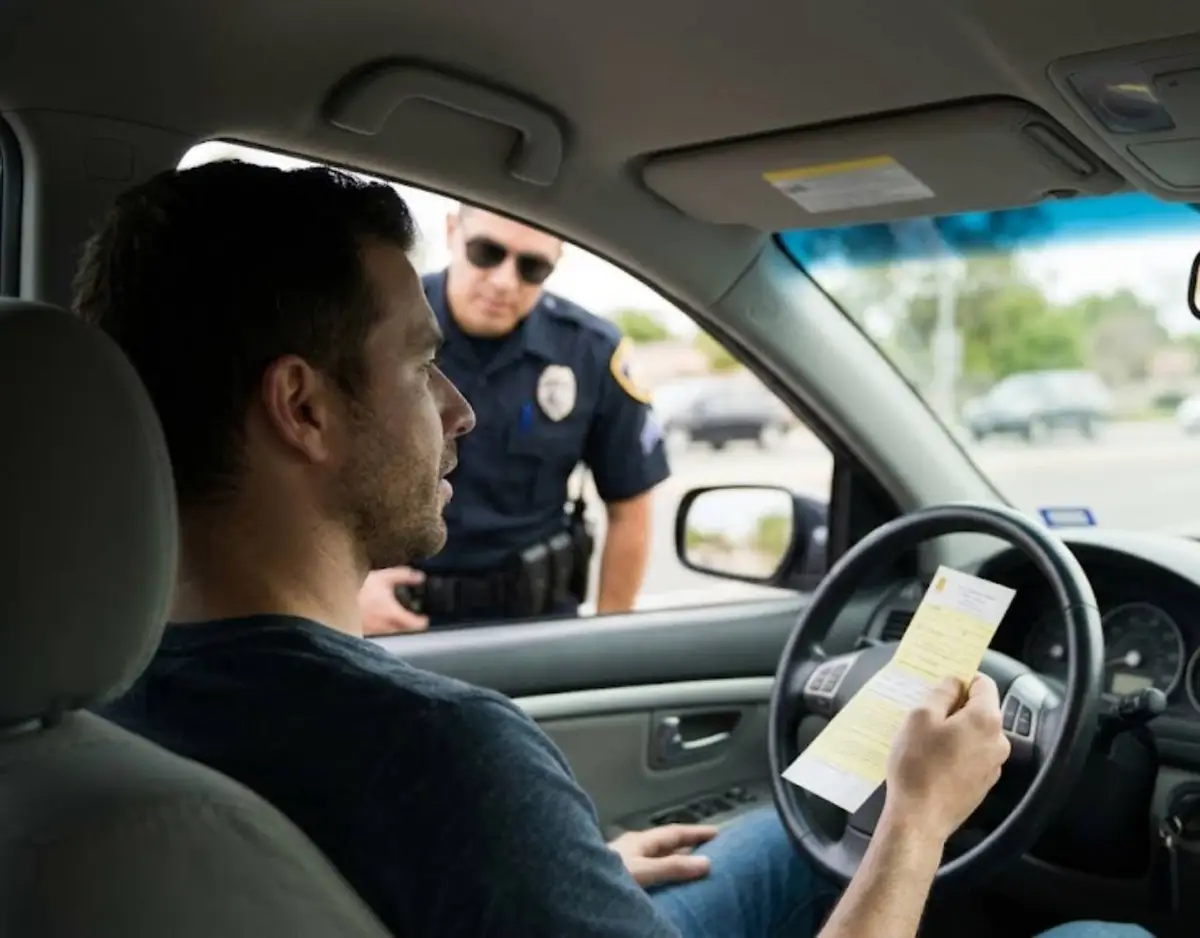
A police officer hands you a traffic ticket, drives off, and leaves you with a confusing slip of paper and one big question: do you actually have to go to court? In Illinois, the answer depends on what you were charged with. Some tickets can be handled by mail. Others require you, or your lawyer, to stand in front of a judge.
Getting this wrong can cost you your license, so it pays to know which kind of ticket you have before your court date arrives. At Dohman Law Group, we have defended drivers in Chicagoland traffic courts for more than 40 years, and traffic and DUI defense is all we do.
If you are unsure what your ticket means, reach out today for a free consultation, and we will walk you through your options.
Your Ticket Already Tells You Whether Court Is Required
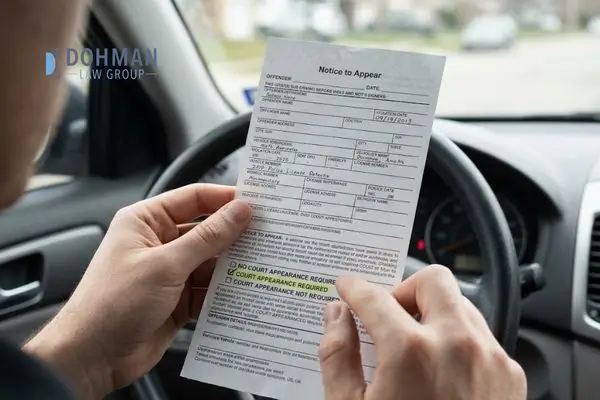
Start by looking at the ticket itself. Most Illinois traffic citations carry one of two labels:
- “You must appear”: you or your attorney must show up on the listed date and time.
- “No court appearance required”: you may be able to resolve the ticket without going to court.
Behind those boxes sits a simple split in the Illinois Supreme Court Rules.
- Minor traffic offenses are petty offenses or business offenses under the Illinois Vehicle Code. Most of these are fine-only tickets, like basic speeding or a rolling stop.
- Major traffic offenses are traffic crimes, such as misdemeanors that carry possible jail time.
Most minor tickets can be resolved with a written plea and payment under Illinois Supreme Court Rule 529. Rule 551 lists the tickets that always require a court appearance, either in person or remotely. Every major traffic offense lands on that list.
Tickets You Can Usually Handle Without a Court Date
If your ticket says no appearance is required, you usually have three choices. Each one affects your driving record differently.
| Option | What you do | Effect on your driving record |
|---|---|---|
| Pay the ticket | Plead guilty in writing and pay the fine | A conviction is reported to the Illinois Secretary of State |
| Traffic safety school (where offered) | Plead guilty, pay, and complete a court-approved course | Usually ends in supervision instead of a conviction, if you qualify and finish on time |
| Plead not guilty | Request a court date | You get a hearing where the officer must prove the violation |
Supervision can be a valuable result. Under Illinois law, a successfully completed supervision is not considered a conviction. Not every driver qualifies, though, and missing the course deadline can turn the supervision into a conviction.
Also keep in mind that “no appearance required” does not mean “no consequences.” Paying the fine is a guilty plea. That conviction stays on your driving record and can count toward a license suspension.
Tickets That Put You in Front of a Judge
Under Illinois Supreme Court Rule 551, the following tickets require a court appearance. You cannot simply mail in a payment.
| Ticket type | Why court is required | What may be at stake |
|---|---|---|
| Any major traffic offense (traffic misdemeanors) | Rule 551(a) | Possible jail time, fines, and license consequences |
| Reckless driving | Class A misdemeanor under 625 ILCS 5/11-503 | Up to 1 year in jail and a criminal record |
| Driving without valid insurance | Rule 551(b) | Fines and possible registration suspension |
| Driving without a valid license | Rule 551(b) | Criminal charges, depending on the facts |
| Violating a restricted license or permit | Rule 551(b) | Loss of driving relief |
| Passing a stopped school bus | Rule 551(b) | $300 mandatory minimum fine and a 3 month suspension on a first conviction |
| Crash that injured or killed someone else | Rule 551(d) | Additional penalties tied to the harm caused |
| Child passenger safety violations | Rule 551(c) | Fines and court costs |
| Minor offense with a statutory minimum fine over $95 | Rule 551(h) | Higher fines and possible record impact |
| Several charges from the same stop | Rule 551(f) | Combined penalties |
Local ordinance tickets that match these categories follow the same rules.
Petty Offenses, Misdemeanors, and Felony Offenses Compared
Traffic charges come in three general levels. Knowing which one you face tells you how serious your court date is.
| Level | Typical examples | Court required? | Maximum exposure |
|---|---|---|---|
| Petty offenses | Basic speeding, failure to signal, seat belt violation | Usually not, unless Rule 551 applies | Fines only |
| Misdemeanors | Reckless driving, aggravated speeding, driving on a suspended license, first DUI | Yes | Up to 1 year in jail for a Class A misdemeanor |
| Felony offenses | Aggravated DUI, some repeat driving while revoked charges | Yes | State prison time |
A petty violation still deserves attention, but a misdemeanor or felony charge is a criminal case. Those cases call for a defense lawyer from the start.
When a DUI Is Behind the Ticket

Every DUI charge in Illinois requires a court appearance. A DUI is not a ticket you can pay off, and it moves on two tracks at once.
- The criminal case: a first DUI is usually a Class A misdemeanor under 625 ILCS 5/11-501. Before sentencing, the court requires a drug evaluation (an alcohol and drug use assessment).
- The license case: a separate statutory summary suspension can start 46 days after the arrest, even before your court case ends.
For first-time offenders, the statutory summary suspension period is generally 6 months for failing a chemical test and 12 months for refusing one. A second DUI conviction carries a mandatory minimum of 5 days in jail or 240 hours of community service. Getting your license back later also means paying a reinstatement fee to the Secretary of State.
DUI cases have tight deadlines, so talk with a lawyer quickly. Our Illinois DUI penalty chart breaks down what each offense level can carry.
Can a Lawyer Go to Court for You?
Often, yes. Cook County’s Clerk of the Circuit Court states that for tickets marked “You must appear,” you or your attorney must appear on the listed date. In many traffic cases, your lawyer can handle court dates for you, so you can stay at work or school.
There are limits. In misdemeanor cases, judges often expect the driver to attend certain hearings, such as a plea or sentencing. Many Chicagoland courtrooms also allow remote appearances by Zoom for some traffic calls. Your attorney can tell you which dates you personally need to attend.
Why Paying the Fine Is Not Always the Smart Move
Paying a ticket feels like the fastest way to make it go away. It can also create problems that last much longer than the ticket.
- Suspension risk: three moving violation convictions within any 12-month period can lead to a license suspension under 625 ILCS 5/6-206(a)(2).
- Younger drivers face a tighter rule: drivers under 21 can be suspended after two moving violation convictions within 24 months.
- Points add up: each moving violation adds points, and too many points can trigger action by the Secretary of State. Learn more in our guide to driver’s license points in Illinois.
- Insurance costs: a conviction on your record can raise your premiums.
- Lasting records: some violations stay visible for a long period of time. See how long traffic violations stay on your record in Illinois.
A lawyer may be able to ask for supervision or a reduced charge, depending on your history and the facts. No outcome is ever certain, but you should know your options before you plead guilty.
What Happens If You Skip a Required Court Date

Missing court makes things worse, fast. Under Illinois Supreme Court Rule 556:
- On a minor ticket, the court can enter a judgment against you without you there and report it to the Secretary of State.
- On a major traffic offense, the court can enter a failure to appear order. The Secretary of State then suspends your license until you resolve the case. The judge may also issue a warrant for your arrest.
In Cook County, you generally have 30 days to file a motion asking the court to undo a judgment entered while you were absent. We cover the full process in our article on what happens if you miss your court date for a traffic ticket.
How Traffic Court Works in Cook, DuPage, Kane, and Lake Counties
The rules above apply statewide, but each county runs its own traffic courtrooms. Here is a quick look at the four counties our offices serve.
| County | Where suburban traffic cases are heard | Local notes |
|---|---|---|
| Cook County | Municipal district courthouses, including the Third Municipal District in Rolling Meadows | Eligible tickets marked “no court appearance required” can use the Clerk’s court diversion options. Zoom is available for some traffic calls. |
| DuPage County | DuPage County Judicial Center in Wheaton | See our DuPage County courthouse guide for parking, security, and courtroom tips. |
| Kane County | Kane County Judicial Center and branch courts | Serves drivers ticketed in Aurora, Elgin, and nearby communities. Remote appearances may be available on some calls. |
| Lake County | Lake County courthouse in Waukegan and branch courts | Part of the 19th Judicial Circuit. |
Always check your ticket for the exact courthouse, courtroom, and time. You generally cannot change a court date by phone.
Getting Ready for Your Court Date
If you do have to appear, a little preparation goes a long way.
- Read your ticket closely and confirm the courthouse, room, and time.
- Gather your license, insurance card, and any photos or records from the stop.
- Arrive early, or log in early for a Zoom call.
- Do not plead guilty or speak with the prosecutor before you understand your options.
- Talk with a traffic lawyer before the court date, not on the courthouse steps.
For a full checklist, read our guide on how to prepare for traffic court.
Facing a Must-Appear Ticket? Let Us Handle the Courtroom

A ticket that requires a court appearance is the law’s way of saying the stakes are higher. Your license, your insurance rates, and sometimes your freedom are on the line. You do not have to figure that out alone.
Dohman Law Group handles DUI and traffic cases exclusively. For two generations, our attorneys have appeared in courtrooms across Cook, DuPage, Kane, and Lake counties, with offices in Rolling Meadows, Wheaton, and Geneva. We review your ticket, explain what the charge can carry, and fight to protect your record. Prosecutors treat many traffic cases as public safety matters, so you deserve someone just as serious on your side.
Contact our team today to schedule a free case review before your court date.
Frequently Asked Questions
Usually not, if it is a basic speeding ticket and your citation says no appearance is required. Speeding 26 mph or more over the limit is aggravated speeding, a misdemeanor that requires a court date.
For many minor tickets, yes. Paying counts as a guilty plea, though, and the conviction goes on your driving record.
The court can enter a judgment against you, and on more serious charges, your license can be suspended or a warrant issued. Act quickly to fix it.
Sometimes. Depending on your record and the facts, a lawyer may be able to seek supervision or a lesser charge, though no result can be promised.