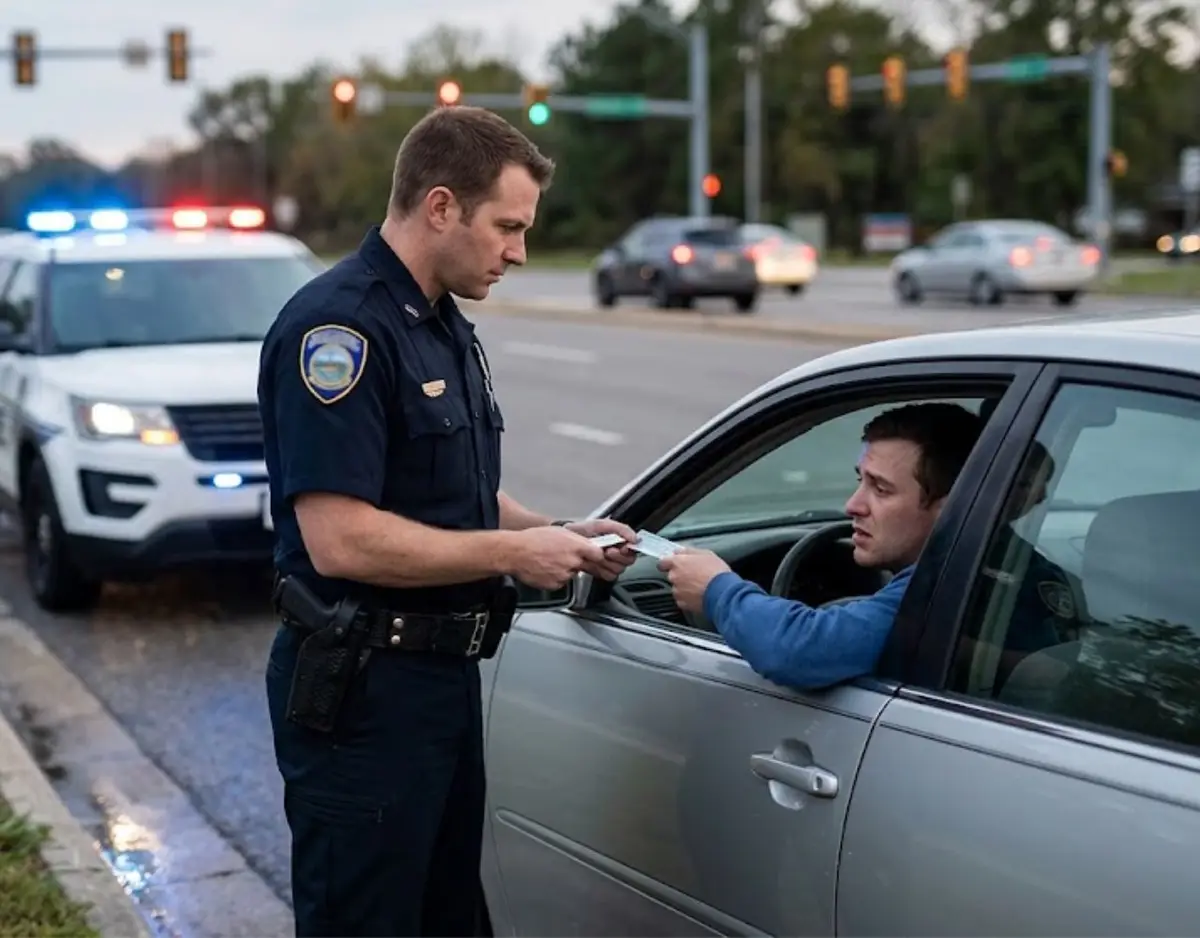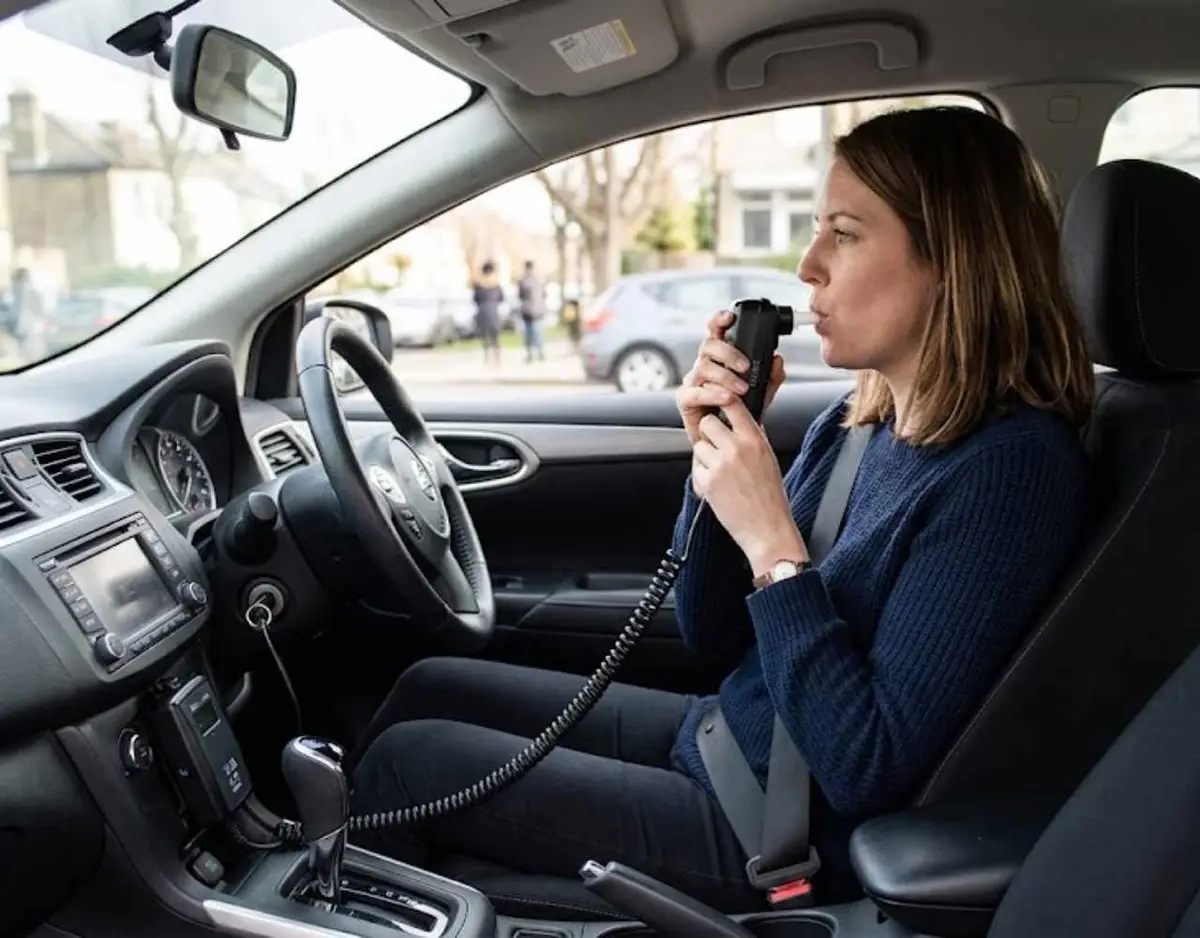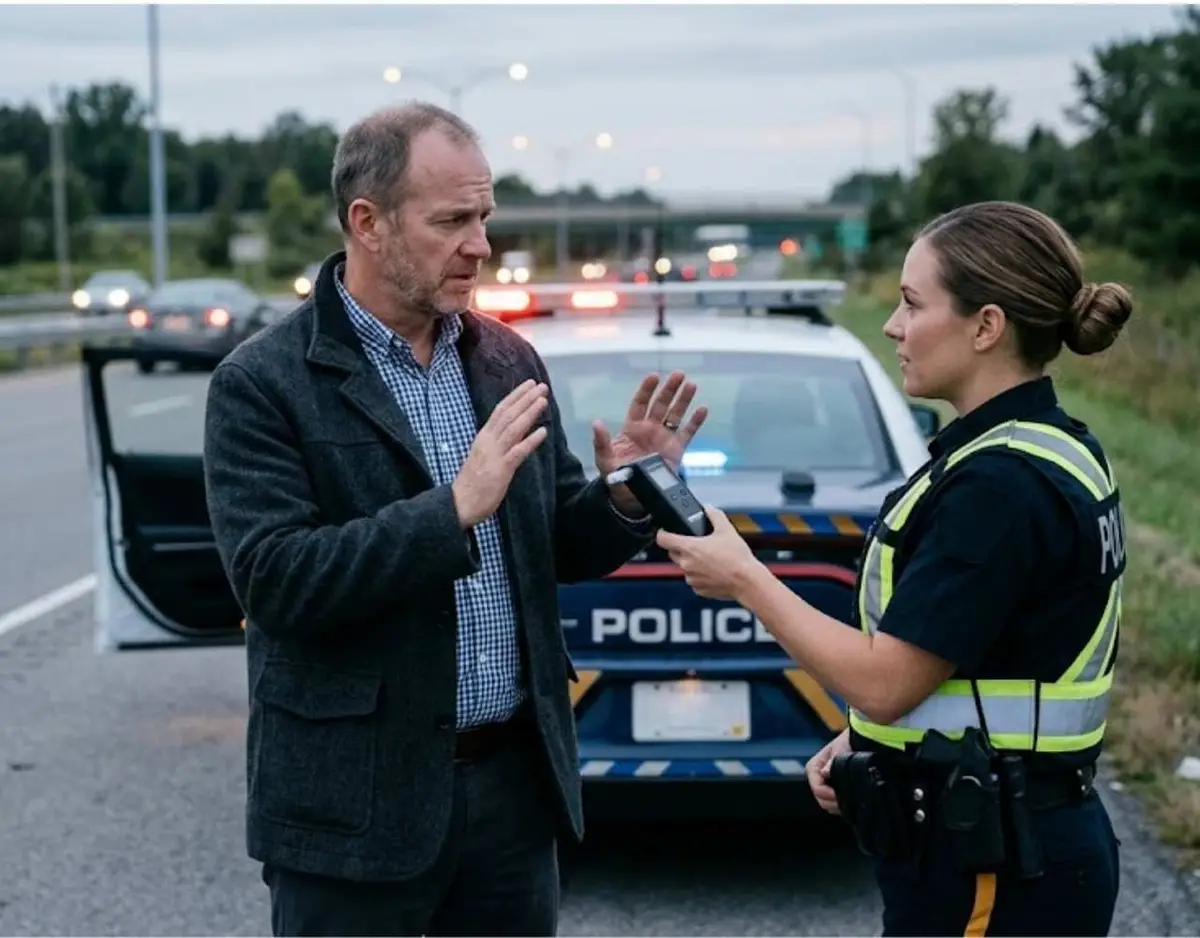
If an officer just asked you to blow into a breathalyzer somewhere in Cook, DuPage, Kane, or Lake County, you do not have much time to think it through. That is exactly why so many drivers get this wrong. Illinois law does not give you a truly free choice here: refusing a breath test carries its own license suspension, and failing one carries a different suspension, on top of the DUI charge itself.
Dohman Law Group has handled Illinois DUI and traffic cases for more than 40 years, from Rolling Meadows to Wheaton to Geneva. Below is what the implied consent law actually says, what happens with each choice, and where to go from here. If you already took the test, refused it, or you are sitting in a holding cell right now, contact us for a free consultation before you make another decision about your case.
There Is No Cost-Free Option, but the Penalties Are Different
Here is the direct answer. Under Illinois’ implied consent law, refusing a breath, blood, or urine test after a lawful DUI arrest triggers an automatic license suspension, separate from whatever happens in your criminal case. Taking the test and testing at a blood alcohol concentration (BAC) of 0.08 or above triggers a different, usually shorter, suspension.
Neither choice is a way out:
- Refusing does not avoid the DUI charge. In serious cases, the police can often still get a warrant for blood.
- Taking the test does not avoid a suspension, if the result comes back at or above the legal limit.
The right move depends on your specific situation:
- Whether you have prior offenses
- How much you had to drink
- Whether there was a crash
- What evidence law enforcement already has
That is exactly the kind of judgment call worth a phone call to a lawyer before you decide, not after.
What Illinois’ Implied Consent Law Actually Requires
Illinois’ implied consent law is found at 625 ILCS 5/11-501.1. It says that by driving on Illinois roads, you have already agreed to submit to chemical testing of your breath, blood, or urine if a police officer or other law enforcement officer arrests you for DUI with probable cause to believe you were impaired.
Before testing you, the officer has to read you a “Warning to Motorist.” This warning has to tell you that:
- Refusing the test leads to a statutory summary suspension
- Testing at 0.08 or above leads to a suspension too
The officer has to give you this warning whether or not you sign anything acknowledging it.
This process runs on a separate track from your criminal DUI case. Even if your DUI charge later gets dismissed, reduced, or resolved through court supervision, the statutory summary suspension from the implied consent law can still apply. The two systems do not automatically cancel each other out.
The Roadside Breath Test Is Not the Same as the One at the Station
Not every breath test carries the same legal weight, and this is one of the more confusing parts of a traffic stop.
A portable breath test (PBT), the small handheld device an officer may ask you to blow into on the roadside, is generally used to help establish probable cause for an arrest. In most Illinois DUI cases, the numeric result from a roadside PBT is not admissible to prove your blood alcohol content at trial.
The evidentiary breath test, the one given later at the police station or a testing facility on certified equipment, is a different matter. That result can be used as evidence of your blood alcohol content in both the criminal case and the separate license suspension proceeding.
Field sobriety testing, including the walk and turn, the one-leg stand test, and other standardized field sobriety tests, typically happens before either breath test. Officers use your performance on these tests, along with driving behavior and any body camera footage, to build probable cause for the arrest in the first place.
What Happens If You Refuse the Test

Refusing chemical testing after a lawful DUI arrest triggers a statutory summary suspension of your driving privileges. Illinois law treats a first-time refusal differently than a repeat one.
- First offense: refusing testing typically results in a 12-month suspension of your driver’s license.
- Second or subsequent offense within a 5-year lookback: a refusal typically results in a 3-year suspension.
- Crash involving serious injury or death: refusing to test can lead to a summary revocation instead of a suspension, which is a harsher outcome.
Refusal itself can also be introduced as evidence against you in the criminal DUI case, since Illinois law allows evidence of refusal to be admitted in both civil and criminal proceedings arising from the arrest.
What Happens If You Take the Test and Fail
If you take the test and your blood alcohol content comes back at 0.08 or above, or a chemical test shows a qualifying amount of cannabis or another controlled substance, that also triggers a statutory summary suspension, just a different one than a refusal.
- First offense: a failed test typically results in a 6-month suspension.
- Second or subsequent offense within the 5-year lookback: a failed test typically results in a 1-year suspension.
Illinois law also sets up presumptions tied to the number itself:
- 0.05 or below: presumed to mean you were not under the influence.
- Above 0.05 but below 0.08: no presumption either way, though prosecutors can still use it along with other evidence.
- 0.08 or higher: presumed to mean you were under the influence, though that presumption can be challenged with other evidence about the testing process or your condition at the time.
First Offense Versus Second or Subsequent Offense
The length of your statutory summary suspension depends heavily on whether this is your first DUI-related offense or a repeat one within the last 5 years. Here is how the two paths compare.
| Situation | First Offense | Second or Subsequent Offense (5-Year Lookback) |
|---|---|---|
| Refuse Testing | 12-month suspension | 3-year suspension |
| Fail Testing (0.08 or higher) | 6-month suspension | 1-year suspension |
| Eligible for MDDP? | Usually yes | No |
| Eligible for RDP? | Not usually needed | Often yes, through a hearing |
These figures come from Illinois’ implied consent and summary suspension statutes and are current as of this writing, but the law changes and every case has its own facts. Confirm your exact suspension length and eligibility with an attorney or the Illinois Secretary of State before assuming which column applies to you.
Getting Back on the Road After a Suspension
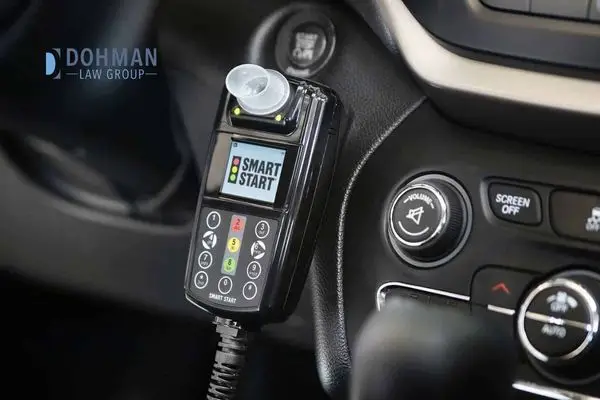
A suspended license does not always mean you are stuck without full driving privileges for months.
If this is your first DUI-related offense, you may be able to apply for a Monitoring Device Driving Permit (MDDP). An MDDP allows you to keep driving during the suspension period, as long as your vehicle has a Breath Alcohol Ignition Interlock Device (BAIID) installed. The BAIID device requires a clean breath sample before your car will start and periodically while you drive, and it keeps a record of every attempt.
If you do not qualify for an MDDP, typically because this is a second or subsequent offense, a Restricted Driving Permit (RDP) may be available instead. An RDP usually requires a hearing with the Illinois Secretary of State, along with an alcohol or drug evaluation and proof of any required driver safety class or treatment.
Once your suspension period ends, reinstatement can include:
- A hearing
- An evaluation
- A reinstatement fee
- Specific reinstatement documents
- SR-22 insurance for a period of time, depending on your case
A DUI attorney can walk you through which permit fits your situation and help you avoid mistakes that slow down reinstatement.
Learn More: Illinois Driver’s License Reinstatement
Medical Conditions, Testing Equipment, and Other Things That Can Go Wrong
Breath testing equipment and the process behind it are not perfect, and that matters for your defense.
Several everyday factors can affect how a breath test reads:
- Certain medical conditions
- Diet
- The type of alcohol involved
- Body weight
- Timing
- What you have eaten
A medical professional’s input can sometimes explain a result that looks worse than the reality, which is one reason chemical test results are not always the final word.
Beyond the science, there are legal issues worth reviewing with a lawyer:
- Did the officer have probable cause for the traffic stop in the first place?
- Was the testing equipment properly calibrated and certified?
- Were you given the required Warning to Motorist before testing?
- Does body camera footage match the officer’s written report?
- Were there constitutional violations in how the stop, arrest, or testing was handled?
None of this means a charge or a suspension will automatically go away. It means these are the kinds of questions a defense attorney reviews before deciding how to approach your case.
What to Do After a DUI Stop in Illinois
A DUI stop moves fast, and what you do in the hours and days after matters.
- Stay calm and polite with the officer, even if you disagree with what is happening. Arguing at the scene will not help your case later.
- Avoid volunteering extra information. You can provide your license and registration without explaining how much you had to drink or where you were coming from.
- Write down what you remember as soon as you can: the time of the stop, what tests you were asked to do, and anything the officer said.
- Request a copy of the police report and any body camera footage once it becomes available.
- Contact a DUI attorney before your court date or suspension hearing deadline. Illinois generally gives you a limited window, commonly 90 days, to file a petition challenging a statutory summary suspension, so waiting too long can close off options.
DuPage County and Other Illinois Courts Where We Appear

Where your case is heard matters. Our attorneys regularly appear in the DuPage County Courthouse in Wheaton, along with courts across Cook, Kane, and Lake counties, and we know the local prosecutors, judges, and procedures in each one. Michelle Gresko’s background as a former prosecutor is a particular asset for clients facing charges in the Kane and DuPage County courts.
A statutory summary suspension hearing and a criminal DUI case can move on different timelines depending on the county, which is one more reason to get a local attorney involved early rather than trying to track two deadlines on your own.
If you are working through a breath test decision, a suspension, or a DUI charge anywhere in our service area, schedule a free case review with our team. We will walk through what already happened, what is still ahead, and what your realistic options look like from here.
Frequently Asked Questions
No. Refusing chemical testing after a lawful DUI arrest triggers its own statutory summary suspension under Illinois’ implied consent law, separate from the criminal DUI charge itself.
No. A roadside PBT is generally used to help establish probable cause for an arrest, while the evidentiary breath test given later at the station uses certified equipment and can be used as evidence of blood alcohol content in both your criminal case and your license suspension case.
For a first offense, refusal typically results in a 12-month suspension. For a second or subsequent offense within 5 years, refusal typically results in a 3-year suspension. Exact eligibility and length depend on your specific case.
Many first-time offenders can apply for a Monitoring Device Driving Permit, which allows driving with a BAIID installed. Drivers who do not qualify for an MDDP may be able to seek a Restricted Driving Permit through a Secretary of State hearing instead.
Not always. In cases involving a serious crash or other aggravating factors, law enforcement can sometimes obtain a warrant for a blood draw regardless of your refusal.