A DUI arrest in Illinois puts your driver’s license at risk in two ways. The Illinois Secretary of State can suspend your driving privileges within weeks of the traffic stop, and a DUI conviction leads to revocation, which has no automatic end date. Whether you lose your license depends on how your case ends, what your driving record shows, and the steps you take in the first 90 days.
At Dohman Law Group, DUI defense and traffic defense are the core of what we do, and our family firm has stood beside Chicagoland drivers for more than 40 years. Your deadlines have already started, so call us at (847) 616-9993 or schedule a free consultation to talk through your options.
Revocation Happens After a DUI Conviction, Not After the Arrest
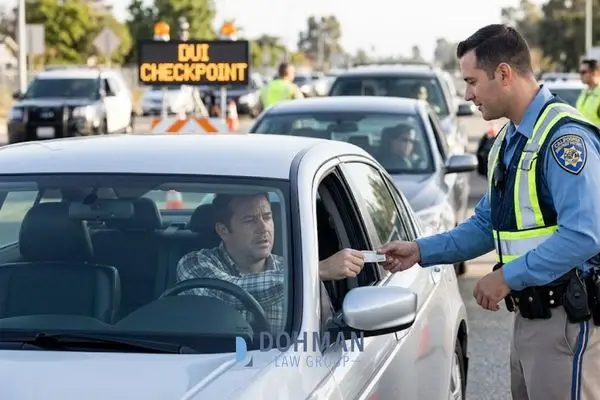
Illinois revokes your license only if a court convicts you of DUI. Under the Illinois Vehicle Code, the Secretary of State must revoke a driver’s license once it receives a report of a DUI conviction (625 ILCS 5/6-205).
The arrest itself triggers something different: a statutory summary suspension. That is an administrative penalty tied to your breathalyzer test or blood alcohol testing, and it runs on its own track.
Many drivers face both. Here is how the two penalties compare.
| Statutory Summary Suspension | License Revocation | |
|---|---|---|
| What triggers it | Failing or refusing chemical testing after a DUI arrest | A DUI conviction in court |
| Who imposes it | Illinois Secretary of State, based on the police report | Illinois Secretary of State, after the court reports the conviction |
| When it starts | 46th day after notice | After conviction |
| End date | Fixed length | No automatic end date |
| How you get your license back | Wait out the term, pay the reinstatement fee | Win a Secretary of State hearing and meet every reinstatement requirement |
| Driving options | Monitoring Device Driving Permit for most first offenders | Restricted Driving Permit, often with a BAIID |
In short, a suspension is temporary. A revocation cancels your driving privileges until the state decides you are safe to drive again.
Your First Penalty: The Summary Suspension Clock
Illinois has implied consent laws. By driving on Illinois roads, you agree to chemical testing if police officers arrest you for DUI. If your blood alcohol concentration (BAC) tests at 0.08 or higher, or if you refuse the chemical test, the officer serves you with a notice of statutory summary suspension.
The suspension takes effect on the 46th day after that notice. Until then, the notice itself acts as your temporary driving permit.
How Long the Suspension Lasts
The length depends on two things: whether you failed or refused the test, and whether Illinois treats you as a first offender (625 ILCS 5/6-208.1).
| Your Situation | Failed the Test (BAC 0.08+) | Refused the Test |
|---|---|---|
| First offender | 6 months | 12 months |
| Non-first offender | 1 year | 3 years |
You generally count as a first offender if you have had no DUI conviction, DUI court supervision, or prior summary suspension in the last five years.
You Have 90 Days to Fight Back
You can challenge the suspension at a petition to rescind hearing in the county where you were arrested. You must file within 90 days of the notice, and the court holds the hearing within 30 days of your request.
Filing does not pause the suspension. It does give your attorney a chance to question the arresting officer under oath. The hearing focuses on a short list of issues:
- Whether police actually arrested you for DUI
- Whether the officer had reasonable grounds to believe you were impaired
- Whether you refused testing after proper warnings
- Whether your BAC test results showed 0.08 or more
This is where the details of your traffic stop matter. We look closely at the police report, dashcam footage, how the officer ran the field sobriety test (including the horizontal gaze nystagmus test), and how the breathalyzer test was handled. If the court rescinds the suspension, it comes off your Illinois driving record.
How Long a DUI Revocation Lasts in Illinois
A revocation has a minimum length, not a set end date. Once the minimum passes, you become eligible to apply for reinstatement. Your license does not come back on its own.
The minimum grows with each DUI conviction on your record.
| DUI Conviction | Minimum Revocation Period |
|---|---|
| First conviction (age 21 or older) | 1 year |
| First conviction (under age 21) | 2 years |
| Second conviction within 20 years | 5 years |
| Third conviction | 10 years |
| Fourth or later conviction | Lifetime |
A lifetime revocation does not always mean you never drive again. An Illinois resident may apply for a restricted permit five years after the most recent revocation (or five years after release from prison, whichever is later). The driver must prove at least three years of uninterrupted abstinence, and the permit only allows driving a car with an ignition interlock.
An aggravated DUI, such as a crash that causes great bodily harm or death, brings a felony criminal charge and even longer consequences for your driving privileges. Our felony DUI page covers those cases in more detail.
Court Supervision Can Keep a Revocation Off Your Record
For many first-time drivers, the most important question is whether the case ends in a conviction at all.
Illinois judges can sentence an eligible first offender to court supervision. Supervision is not a conviction. If you complete its terms, which can include fines, community service, a victim impact panel, and alcohol treatment counseling, the court dismisses the charge, and no revocation follows.
There are strict limits:
- You can receive DUI supervision only once in your lifetime.
- You are not eligible if you have a prior DUI conviction or prior DUI supervision.
- A prior plea agreement that reduced a DUI to reckless driving also blocks supervision.
- Felony DUI charges are not eligible.
Supervision does not cancel your summary suspension. Those are separate penalties. Whether supervision is realistic depends on your record and the evidence, which is why a careful review of your first DUI case matters early.
Ways to Keep Driving to Work, School, and Treatment
Losing your license does not always mean losing all driving privileges. Illinois offers two main permits, and the right one depends on where you are in the process.
| Permit | When It Applies | Who Usually Qualifies | Key Conditions |
|---|---|---|---|
| Monitoring Device Driving Permit (MDDP) | During a summary suspension | Most first offenders | BAIID required; drive at any time for any purpose |
| Restricted Driving Permit (RDP) | During a revocation, or a repeat offender’s suspension | Drivers who show hardship and meet Secretary of State requirements | Limited hours and purposes; BAIID required after two or more DUIs; expires within 2 years |
The MDDP for First Offenders
The Secretary of State mails most first offenders information about the MDDP after the summary suspension is entered. With this BAIID permit, you can drive while the suspension runs, as long as your vehicle has a Breath Alcohol Ignition Interlock Device installed.
The device asks for a breath sample before the car starts and at random times while you drive. You pay the installation, rental, and monitoring costs. Some drivers are not eligible, including drivers under 18, drivers in crashes that caused death or great bodily harm, and anyone who needs to drive a commercial vehicle.
Our guide to the Breath Alcohol Ignition Interlock Device explains how the device works and what happens if it records a violation.
The RDP After a Revocation
A Restricted Driving Permit, sometimes called a hardship permit, lets you drive for set reasons such as work, school, medical care, or alcohol treatment. You apply for it through a Secretary of State hearing.
If you have two or more DUI convictions, any RDP requires a BAIID. After a second or later DUI, you must keep the device for at least five years before full reinstatement. Drivers under 21 face tighter limits, including a 5 a.m. to 9 p.m. driving window once they qualify.
Never Drive Without a Valid Permit
Driving on a revoked license is a new criminal case. It can lead to jail time, a longer revocation, and possible felony charges for repeat violations. Police can see your license status in seconds when they run your plate. Wait for the permit. It protects everything you are working toward.
What It Takes to Win Back a Revoked License
After your minimum revocation period, you can ask the Illinois Secretary of State to restore your license. The state will not simply mail it back. You need to prove you are a safe driver and that alcohol will not put you behind the wheel impaired again.
Informal vs. Formal Secretary of State Hearings
| Informal Hearing | Formal Hearing | |
|---|---|---|
| Typical case | A single DUI revocation with no death or serious injury | Two or more DUIs, or a crash involving death or serious injury |
| Setting | Held at select Driver Services facilities | Held before a hearing officer, with testimony recorded |
| Scheduling | Often first come, first served | You request a hearing date in advance |
| Evidence | Documents plus an interview | Documents, sworn testimony, and possible questioning by a state attorney |
The Reinstatement Process, Step by Step
- Order your Illinois driving record. It shows every suspension and revocation you need to clear.
- Complete a substance abuse evaluation. A licensed provider assigns a risk level based on your history and BAC.
- Finish the required treatment or education. This can include a remedial education course or ongoing alcohol treatment counseling.
- Gather supporting documents. Treatment records, support letters, and proof of abstinence all carry weight.
- Attend your hearing. The hearing officer decides whether to grant a restricted permit, full reinstatement, or neither.
- Pay reinstatement fees and file SR-22 insurance. SR-22 proof of insurance usually stays in place for three years.
- Visit a Driver Services facility. You may need to retake written, vision, or road tests before the state issues your new license.
Hearing officers can deny a request when paperwork is missing or testimony does not line up with the records. You can reapply, but a denial costs you valuable time. Our Illinois driver’s license reinstatement team prepares clients for every question the hearing officer is likely to ask.
Arrested in Illinois With an Out-of-State License

An Illinois DUI follows you home. Illinois belongs to the Interstate Driver License Compact, so it reports DUI convictions and suspensions to your home state. Your home state may then add its own penalties under its own laws.
Illinois cannot revoke another state’s license. It can revoke your privilege to drive in Illinois, and that revocation can block your home state from renewing your license until you clear it. Out-of-state residency does not excuse you from Illinois reinstatement requirements, though some steps may be handled without returning in person.
If you live outside Illinois, tell your attorney right away. Timing and paperwork between two states can get complicated fast.
Defense Strategy Starts With the Evidence
Every DUI case turns on its own facts. A strong defense strategy looks at the whole criminal case, from the first moment of the traffic stop to the last BAC test result. Common questions we investigate include:
- Did the officer have reasonable suspicion to pull you over?
- Did the officer give field sobriety tests according to training standards?
- Was the breath machine properly maintained and certified?
- Did blood alcohol testing follow required procedures?
- Does the dashcam or bodycam footage match the police report?
Problems in any of these areas can affect both the summary suspension and the criminal charge. No single issue decides a case, but each one can change your options.
Steps to Take Right Now to Protect Your License
- Write down everything you remember about the stop while it is fresh.
- Keep your ticket and the Notice of Summary Suspension in a safe place.
- Mark the 90-day deadline to challenge the suspension.
- Avoid talking about the arrest on social media or with anyone except your lawyer.
- Do not drive once the suspension begins unless you hold a valid permit.
- Speak with a DUI attorney before your first court date.
Protect Your Driving Privileges Before the Deadlines Pass

An Illinois DUI does not automatically cost you your license for good. A first offense may end in court supervision with no revocation. A summary suspension can be challenged. And even after a revocation, a clear path back to legal driving exists through the Secretary of State.
What you do in the next few weeks shapes every one of those outcomes.
Managing partner Cary Dohman leads a team that has focused on DUI and traffic defense for more than 40 years. We know how Chicagoland prosecutors, judges, and hearing officers approach these cases, and we prepare every client to face them with confidence.
Let’s talk about your case. Request a free case review online or call the office closest to you:
- Rolling Meadows: (847) 616-9993
- Wheaton: (847) 999-7227
- Geneva: (847) 999-7616
Frequently Asked Questions
Usually not. A refusal leads to a statutory summary suspension of 12 months for a first offender or 3 years for a non-first offender, though a refusal after a crash causing death or serious injury can lead to revocation.
In many cases, yes. Most first offenders qualify for a Monitoring Device Driving Permit during the suspension, and drivers facing revocation may qualify for a Restricted Driving Permit.
A DUI conviction stays on your Illinois driving record permanently, and DUI court supervision cannot be expunged or sealed.
Yes, if you want a revoked or suspended license reinstated. Most drivers must keep SR-22 insurance for three years.