A DUI charge, driving under the influence of alcohol or drugs, hits harder when you drive for a living. In Illinois, a Commercial Driver’s License (CDL) holder can lose commercial driving privileges over a DUI arrest, even one that happened off duty in a personal vehicle. A CDL violation tied to impaired driving can put your job and future behind the wheel at risk. Traffic violations that cost most drivers a fine can cost a commercial driver a career.
We built our practice around DUI defense and traffic violations in Illinois. Commercial drivers make up a large share of the clients who call our DUI defense lawyers, and we know your license is also your paycheck. If you hold a CDL and you are facing a criminal charge, schedule a free consultation before you decide how to respond.
A DUI Can Disqualify Your CDL Even If You Were Not Working
Here is the core rule. Under 625 ILCS 5/6-514 of the Illinois Vehicle Code, a DUI conviction, a failed chemical test, or a test refusal can disqualify a Commercial Driver’s License in Illinois, even if you were driving your own personal car rather than a commercial vehicle at the time of the arrest. The rule reaches Commercial Learner’s Permit (CLP) holders training toward a CDL as well.
Illinois DUI law treats CDL and CLP holders differently from other drivers in three specific ways:
- A lower blood alcohol concentration (BAC) threshold
- An extended implied consent warning
- A federal rule that keeps court supervision from protecting a commercial license the way it protects a regular one
Each point gets its own breakdown below. The specific disqualification periods, including what happens on a first offense, a hazmat load, or a second offense, are laid out in the chart further down this page.
Why CDL Holders Face A Tougher Standard
- Lower BAC threshold. Illinois sets the legal blood alcohol content limit at 0.08 percent for most drivers. For a CDL holder operating a commercial motor vehicle, the limit drops to 0.04 percent under Illinois law and federal regulations, roughly half the standard limit and reachable after a couple of drinks depending on body weight and timing.
- Per se limits. Both numbers are per se alcohol limits. Chemical test results at or above the threshold are enough on their own to prove the alcohol element of the charge, without separate proof that driving ability was impaired.
- Reach beyond the truck. The 0.04 percent standard only applies while operating a commercial vehicle, but the disqualification consequence does not stay that contained. A DUI conviction in your own car, off the clock, still triggers a CDL disqualification under 625 ILCS 5/6-514.
- Extended implied consent warning. Illinois’ implied consent law, 625 ILCS 5/11-501.1, requires an officer to tell a CDL holder that refusal or a failed result affects commercial driving privileges under 625 ILCS 5/6-514, separately from the statutory summary suspension the Illinois Secretary of State administers on the personal license.
- Refusal counts the same as a conviction. Refusing the test does not sidestep the CDL consequence. It carries the same disqualification as a failed test, at the periods shown in the chart below.
Learn More: DUI Penalties for CDL Drivers in Illinois
What Happens To Your Personal License At The Same Time
A CDL disqualification and a personal license suspension are two separate tracks that usually move together.
- Statutory summary suspension. This administrative suspension of your regular driving privileges starts shortly after arrest and runs on the Secretary of State’s own schedule, independent of the criminal case.
- Monitoring Device Driving Permit (MDDP). In many first-offense cases, an eligible driver can apply for an MDDP to keep driving a personal vehicle during the suspension. An MDDP does not restore commercial driving privileges.
- License revocation. If the DUI results in a conviction, the Secretary of State revokes the personal license rather than merely suspending it, which means a formal reinstatement process and reinstatement fees before driving privileges return.
Understanding which process affects the CDL and which affects the base license helps avoid confusion about what an MDDP or a court outcome actually restores.
What A CDL Disqualification Actually Looks Like
| Circumstance | CDL Disqualification Period |
|---|---|
| First DUI conviction (any vehicle) | Minimum 1 year |
| First DUI or chemical test refusal while transporting placarded hazardous materials | Minimum 3 years |
| Second major offense (DUI, refusal, leaving the scene, motor vehicle manslaughter, or similar) | Lifetime |
| Out-of-service order violation | 180 days to 2 years |
Illinois’ CDL disqualification law groups DUI together with a short list of other serious offenses, including leaving the scene of a crash and motor vehicle manslaughter, as offenses that trigger the same escalating consequences. Reckless driving and other serious traffic violations can also count toward disqualification under related provisions of the same statute.
A lifetime disqualification means what it says. Illinois does not offer a standard path back to commercial driving after a second major offense. Rules can shift, and individual records vary, so anyone facing a second offense should talk with a defense attorney about their specific situation rather than assume the outcome either way.
Learn More: Can You Get A CDL After A DUI In Illinois?
How These Charges Usually Start
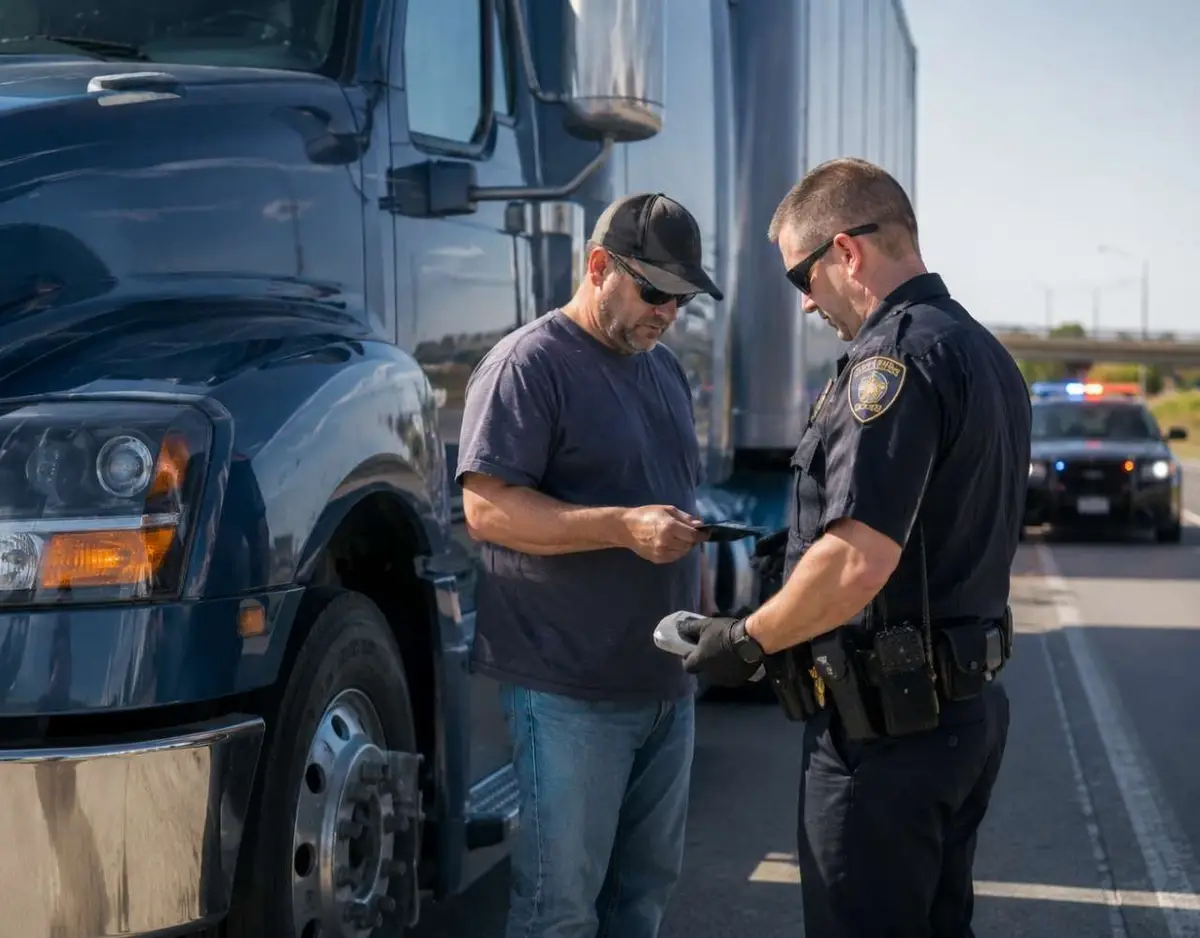
Most CDL DUI cases begin the same way:
- A traffic stop for a minor issue, like a lane violation or a burned-out light
- The officer’s observations and questions
- Field sobriety testing
- A request for a chemical test (breath, blood, or urine)
Dashcam footage, bodycam footage, and the officer’s police reports often become the center of the case later on.
Chemical test results depend on properly maintained chemical testing equipment. Breathalyzer machines require regular calibration, and calibration logs, the officer’s certification, and the specific testing procedure used can all matter if the case reaches an administrative hearing or trial. A blood test carries its own chain-of-custody questions. None of this guarantees a result, but it is exactly what a defense attorney reviews before advising next steps in the criminal prosecution.
Learn More: Common CDL Violations
Why Court Supervision Will Not Protect A CDL
Court supervision is common in the Illinois court system for standard traffic violations. For most drivers, it keeps a conviction off the driving record. For a CDL holder, it does not work the same way.
Two rules explain why:
- Federal regulations on anti-masking bar states from hiding a commercial driver’s traffic conviction through supervision, deferred judgment, or a diversion program.
- Illinois’ own definition of “conviction” for CDL purposes, found in 625 ILCS 5/6-500, already treats a disposition like supervision as a conviction on the commercial driving record, even when it does not count as one for a standard license.
In practice, only two things keep a CDL disqualification off the table: a dismissal, or an amendment to a non-reportable offense before any judgment of guilt.
This is one of the more common misunderstandings we hear from commercial drivers. It is worth knowing before walking into a courtroom assuming supervision will solve the problem.
Building A Defense Without Promising A Result
Every CDL DUI case turns on its own facts. No attorney can promise a dismissal, a reduced charge, or a particular sentence. What a defense attorney can do is examine the case for weaknesses:
- Whether the traffic stop had a valid legal basis
- Whether field sobriety testing was administered and scored correctly
- Whether the breathalyzer equipment or blood test followed proper calibration and chain-of-custody procedures
- Whether a plea deal can resolve the case as a non-reportable offense before judgment is entered
- Whether an administrative hearing or a petition to rescind the statutory summary suspension is available for the personal license side of the case
Some of our attorneys’ cases resolve through negotiation. Others go to trial when that is the better option for the client, and the facts support it. A charge is not a conviction, and the right approach depends on the facts of your stop, your driving record, and the court handling your case.
What To Do After A Traffic Stop That Could Affect Your CDL
- Stay calm and comply with lawful requests, but avoid volunteering details beyond what is required
- Write down what you remember about the stop as soon as you safely can: time, location, and what the officer said
- Request the CDLIS notice and any paperwork given at the scene
- Contact a defense attorney before your court date or any hearing deadline. Some administrative deadlines run in days, not weeks
- Avoid discussing the case on social media or with coworkers who might be interviewed later
Getting legal representation early gives your attorney more room to negotiate a plea deal or prepare a defense before key deadlines pass.
Protecting A Career That Depends On Your License
A CDL is not just a license. It is the tool that keeps a paycheck coming.
A disqualification can end a job before the criminal case is even resolved. Trucking companies and other employers often act on a disqualification notice immediately, regardless of how the underlying case turns out.
That is why early decisions matter:
- How you handle the initial stop
- Whether you request an administrative hearing on the statutory summary suspension
- How the criminal case gets negotiated
All three affect whether your CDL survives the process and what shows up on your driving record afterward. We have spent decades handling DUI defense and traffic violations across Cook, DuPage, Kane, and Lake counties, and CDL holders are a group our driver defense team works with regularly. If your livelihood is riding on the outcome, contact us for a case assessment before your next court date.
Frequently Asked Questions
Yes. Under 625 ILCS 5/6-514, a DUI conviction disqualifies a CDL for at least one year regardless of which vehicle you were driving.
0.04 percent while operating a commercial motor vehicle, compared to 0.08 percent for standard drivers. A DUI conviction in a personal vehicle uses the standard 0.08 percent limit but still triggers the CDL disqualification.
No. Refusal carries the same one-year CDL disqualification as a conviction, and the same three-year period if you were transporting placarded hazardous materials.
No. Federal regulations on anti-masking and Illinois’ own definition of a CDL conviction treat supervision as a reportable conviction for commercial driving purposes, even though it works differently for a standard license.
Illinois law sets a lifetime disqualification for a second major offense under 625 ILCS 5/6-514. Individual circumstances and any available relief can vary, so anyone facing a second offense should review their specific record with a defense attorney.
It is not required, but the disqualification rules, testing procedures, and administrative deadlines involved are technical enough that most CDL holders benefit from legal representation with experience in these specific cases.